
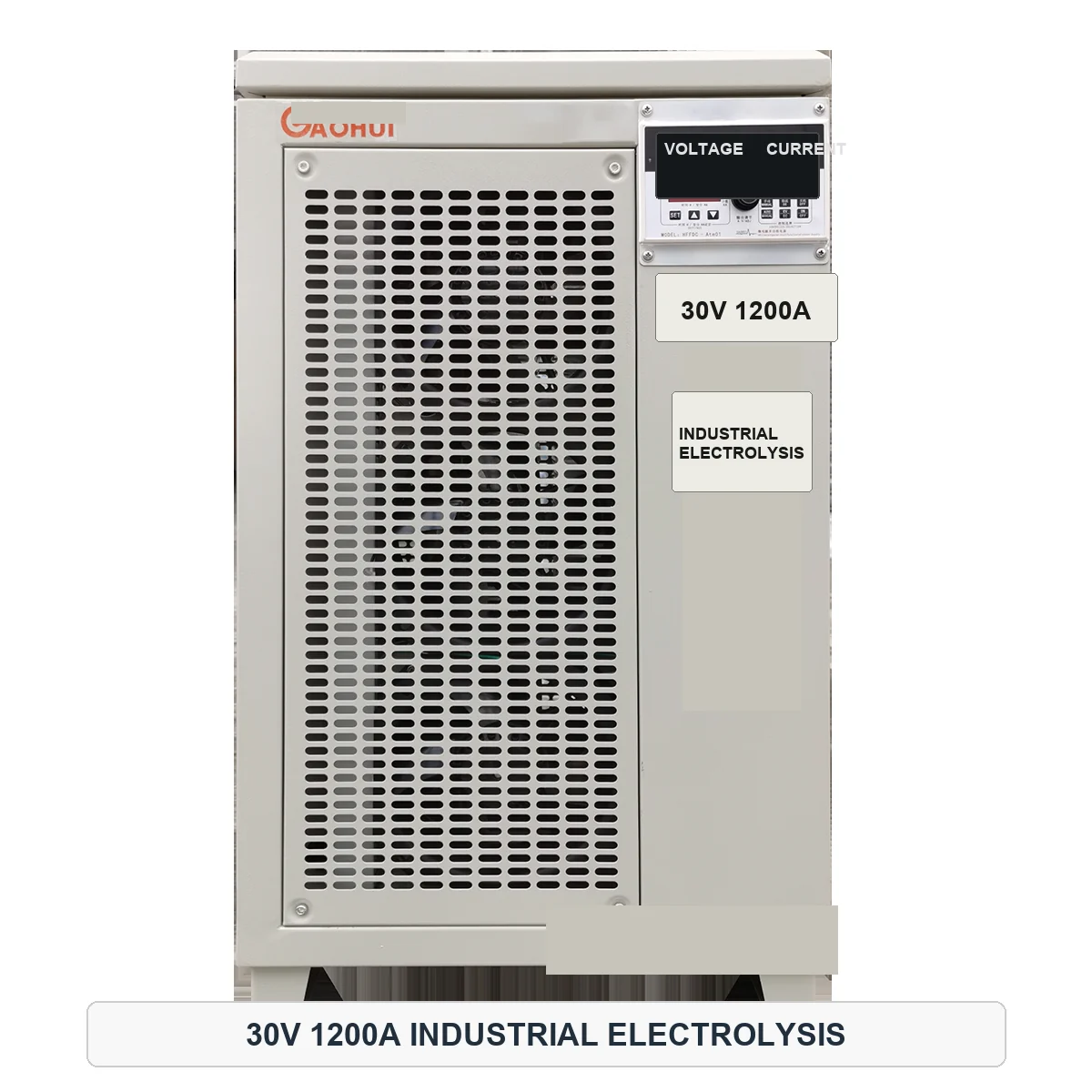
A 30V 1200A Industrial Electrolysis Rectifier supplies up to 36 kW of adjustable DC power for electrolytic cells, production skids and replacement projects. It is intended for processes that need high current at a controlled low-voltage operating point, with the cooling and control interface matched to the equipment.
Controlled DC power for an electrolytic cell
Industrial electrolysis uses electrical current to drive reactions at the electrodes. Depending on the electrolyte and plant design, the process may be used for metal recovery or refining, chemical production, gas generation, surface cleaning or other electrochemical operations. The rectifier controls the electrical operating point; electrode material, electrolyte composition, temperature, circulation, cell geometry and production time determine the wider process result.
With 1200A available, this unit can support a large electrode area or several electrically coordinated sections. The adjustable 30V output provides the voltage needed to overcome the loaded cell voltage and connection losses while allowing normal operation below the maximum rating.
Electrical and mechanical configuration
| Rated DC output | 30V, 1200A |
|---|---|
| Output power | 36 kW |
| Regulation | Adjustable constant-current or constant-voltage operation |
| Cooling options | Air or water cooling according to duty, ambient temperature and installation |
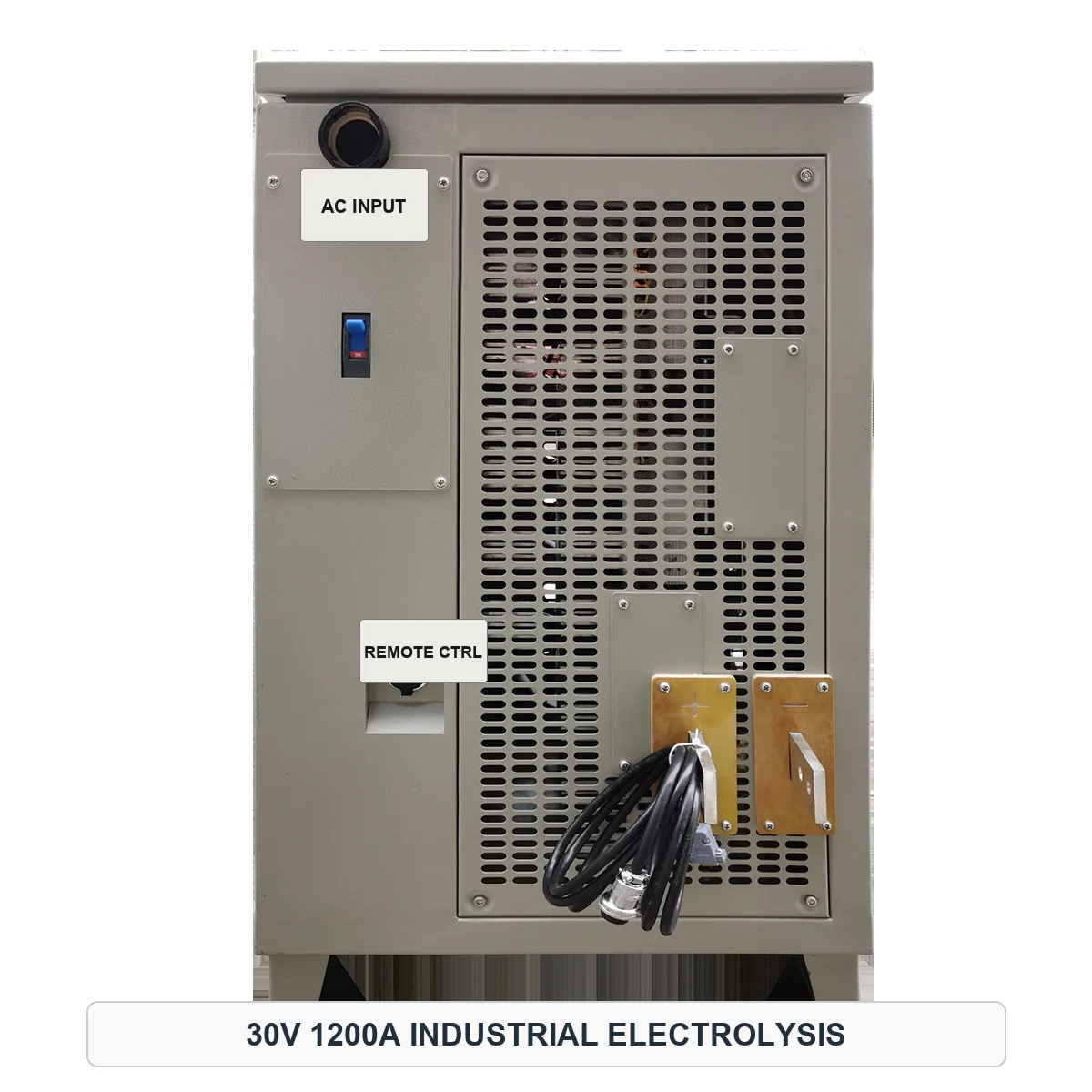
| Operator controls | Local panel, remote station or integration with an OEM control system |
| Communication | RS485 or PLC-compatible signals available when required |
| Typical cabinet class | Approximately W510 × D580 × H790 mm for an air-cooled arrangement in this power range |
| AC input | Commonly configured for industrial three-phase supply |
Where a 30V 1200A rating can fit
This rating can be considered for medium-power electrolysis equipment, OEM cell skids, production expansion and replacement of an older low-voltage high-current rectifier. A new system should be sized from electrode area, target current density and loaded cell voltage. For a replacement, the most useful data are the normal working current, highest stable voltage, daily operating hours and the reason the existing unit is being replaced.
Quick comparison of common enquiry ratings
| Example output | Typical reason to consider it |
|---|---|
| 12V 500A | Smaller cell, pilot production or a low-voltage load |
| 24V 1000A | Medium electrode area with moderate loaded voltage |
| 30V 1200A | 36 kW operating range with additional voltage and current capacity |
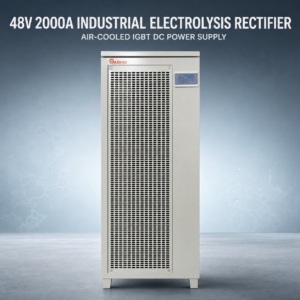
| 48V 2000A or above | Larger electrode area, several sections or higher process capacity |
The best rating is determined by the real cell rather than by the table alone. Series connections generally increase the voltage requirement, while a larger parallel electrode area mainly increases current demand.
Integration options for OEM equipment
The cabinet, cooling circuit, DC terminal direction and control panel can be adapted to the skid layout. Available functions include remote start and stop, current or voltage setpoint input, operating feedback, alarm contacts, timer control, ampere-hour recording and RS485 communication. Interlocks can be coordinated with pumps, cooling equipment or the main machine control where required.
Custom industrial rectifiers are available from 1–1000V and 1–100,000A. Share the electrolyte or load description, electrode connection, normal and maximum current, loaded voltage, operating cycle, cooling utilities and control requirements to receive a suitable configuration.
See more electrolysis rectifiers, browse our industrial DC power supplies, or contact us about the 30V 1200A electrolysis rectifier.
Reviews
There are no reviews yet.