
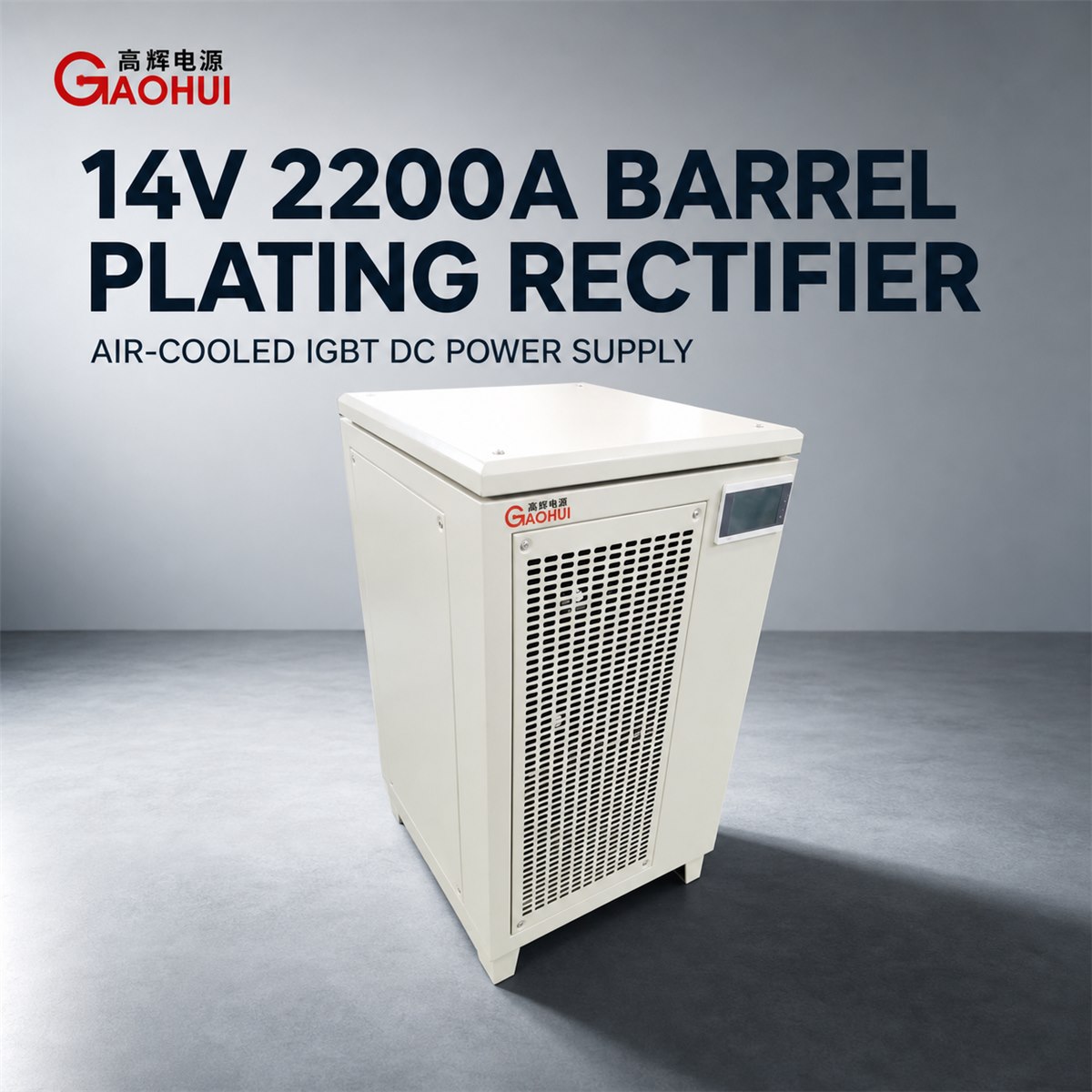
The output rating tells the buyer the available DC ceiling. It does not state that every installation runs at maximum current or voltage. A lower normal operating point can be appropriate when the active area, cell count, work loading, or line speed is lower; a larger rating is reviewed when the maximum condition, expansion plan, or connection losses require it. For a useful quotation, share part surface area, bath type, current-density target, line loading, cycle time, and loaded voltage data. A photograph of the existing unit, a load trend, or a measured operating voltage is often more useful than selecting only by a previous nameplate.
What the DC supply contributes
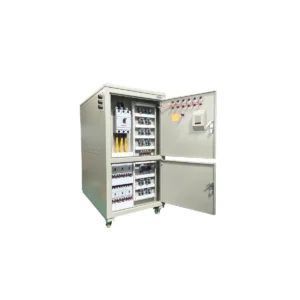
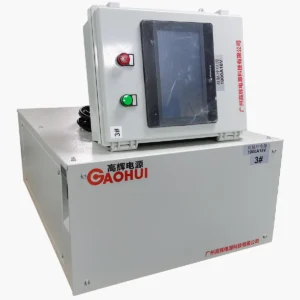
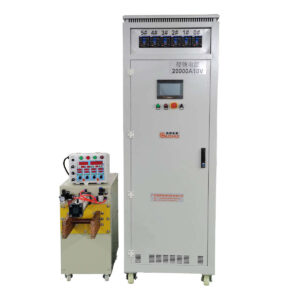
15V 2000A Tin Plating Rectifier is a custom industrial DC power supply for tin plating. It delivers the DC operating range used to control tin deposition on the loaded work surface. It supports a practical electrical baseline for deposition control while the final setting remains process-specific. The final configuration is matched to the actual process load, production duty, and site conditions.
Check the actual electrical requirement
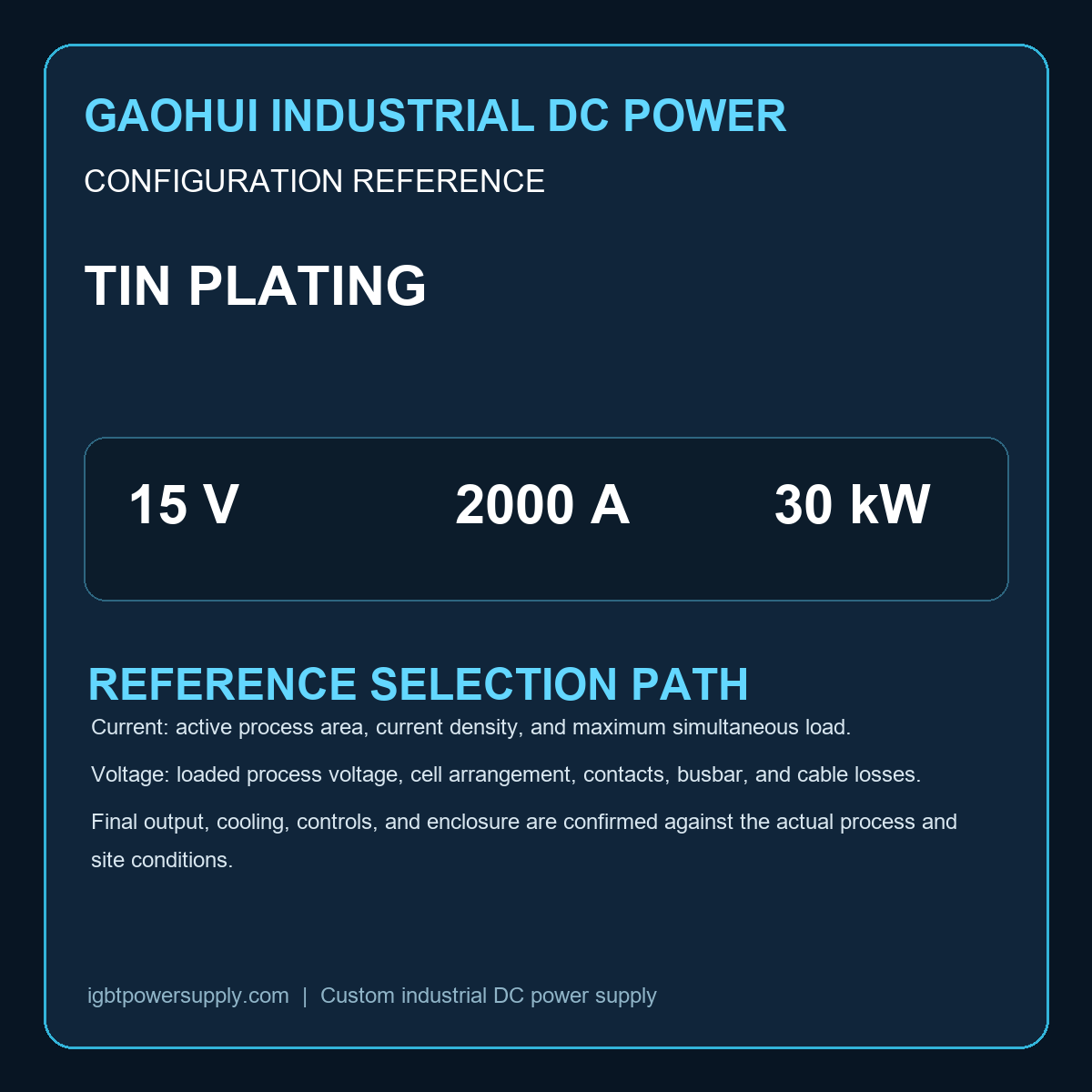
The published 15V / 2000A / 30 kW rating is a reference DC envelope, not a default process setpoint. Determine current from the effective plated area, process current density, fixture loading, and production cycle. Check the bath voltage at maximum load and include contact, conductor, and connection losses.
Reference electrical envelope
| Selection item | Reference for this page |
|---|---|
| Published DC output | 15V, 2000A (30 kW) |
| AC input direction | AC 380V or AC 415V, selected against the site supply |
| Main control mode | Constant-current or constant-voltage, selected for the process |
| Final confirmation | Load, duty, cooling, controls, interfaces, and installation conditions |
Installation and control review
At 30 kW, review thermal conditions, cable routing, terminal access, protection, and installation space with the electrical operating range. The primary control mode is selected as either constant-current or constant-voltage according to the process requirement. Cooling, enclosure, remote signals, and interfaces are confirmed for the project rather than assumed from the industry name.
Common selection questions
Is 15V always the required process voltage?
No. The required voltage is established from the actual loaded process, including cells or tank voltage and connection losses. The published value is the available reference ceiling for this configuration.
Can the current be changed from 2000A?
Yes, the final current direction is reviewed from the real active area, current-density target, cell arrangement, production loading, and expansion requirement.
Practical planning note
Control is part of the selection discussion, not an afterthought. Some projects need a local setting point, while others need remote reference, monitoring signals, interlocks, or a defined response to an external process signal. Identifying those interfaces early helps align the DC supply with the equipment sequence without implying that every optional control is included by default. For this 15V 2000A reference, the relevant question is how the tin plating load behaves at the intended maximum condition.
Discuss this configuration
Talk with our team about a 15v 2000a tin plating rectifier configuration using the actual process data. Contact us for a technical quotation discussion.
Related resources: Electroplating Rectifiers, industrial DC rectifiers, and contact our engineering team.
Reviews
There are no reviews yet.