
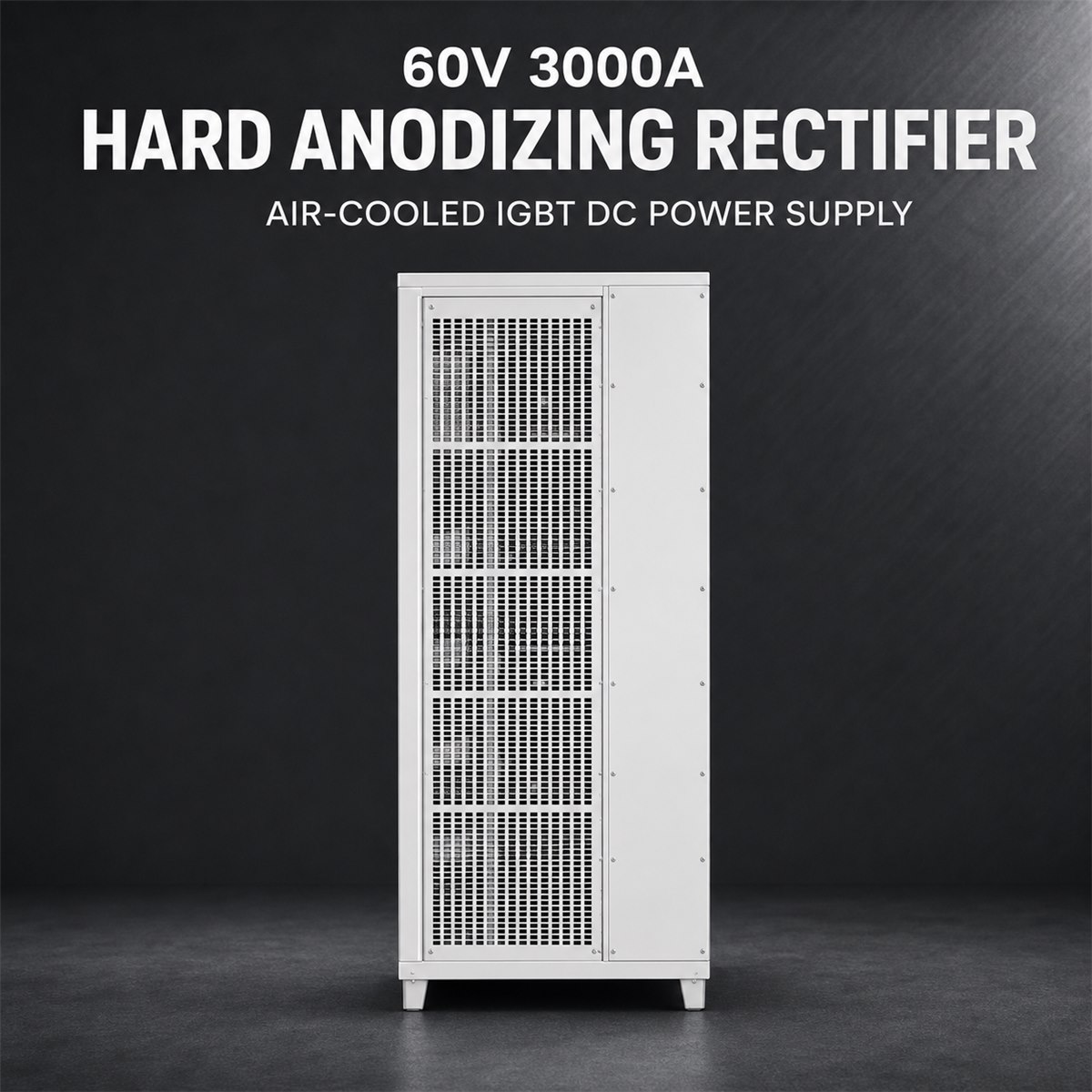
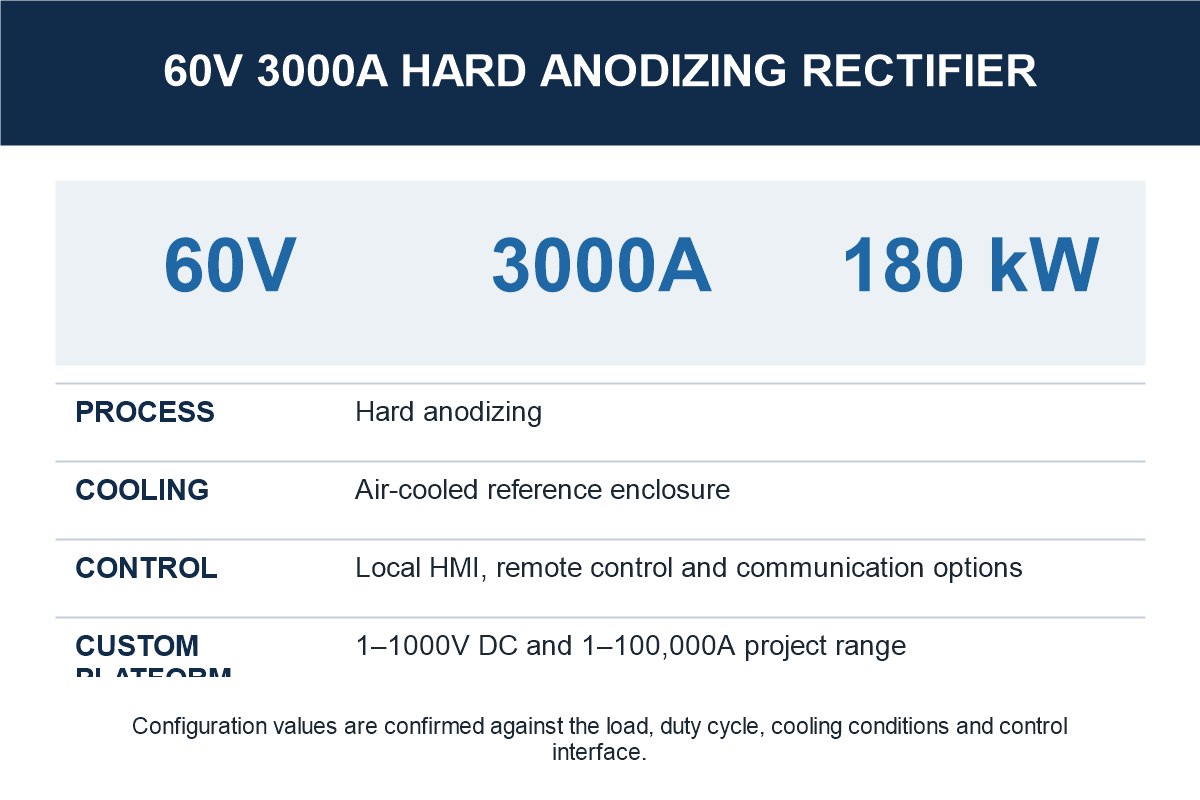
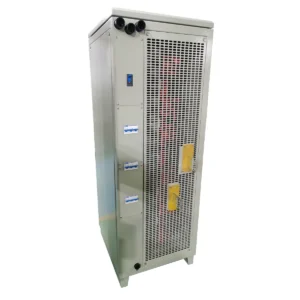
The 60V 3000A Hard Anodizing Rectifier offers 180 kW of controlled DC output for thick hard-coat anodizing where resistance can rise significantly during the cycle.
Why higher voltage matters in hard anodizing
Hard anodizing creates a dense oxide layer while the bath is kept cool and the electrical load is carefully managed. As coating thickness develops, the rectifier may need increasing voltage to hold the required current. A 60V ceiling gives additional working room for demanding alloys, thick coatings or installations with appreciable connection losses. It does not replace correct bath cooling, agitation, racking and current-density selection.
Technical data
| DC output | 60V, 3000A |
|---|---|
| Rated power | 180 kW |
| Regulation | Constant current and constant voltage |
| Cooling | Water cooling for sustained industrial duty |
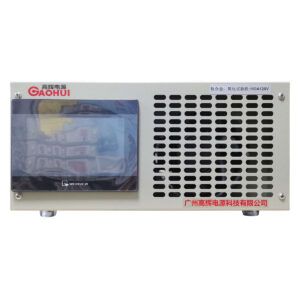
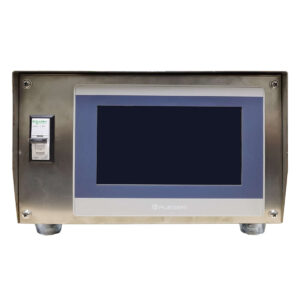
| Available controls | Multi-stage ramps, timer, recipes, PLC and remote HMI |
| Custom output range | 1–1000V and 1–100,000A |
Match the supply to the load
Determine current from total active area at the highest planned current density. Review actual cycle records or test data to establish the peak loaded voltage, then include busbar, cable and rack losses. This helps distinguish a genuine 60V requirement from unnecessary voltage reserve.
Managing the anodizing profile
Programmable ramps can bring the load up gradually and follow multi-stage recipes. Ampere-hour monitoring, data output, cooling-flow supervision and over-temperature interlocks can help operators coordinate the rectifier with the rest of the line.
Compare hard anodizing rectifiers, view all DC rectifier categories, or send your coating cycle for selection support.
Reviews
There are no reviews yet.