
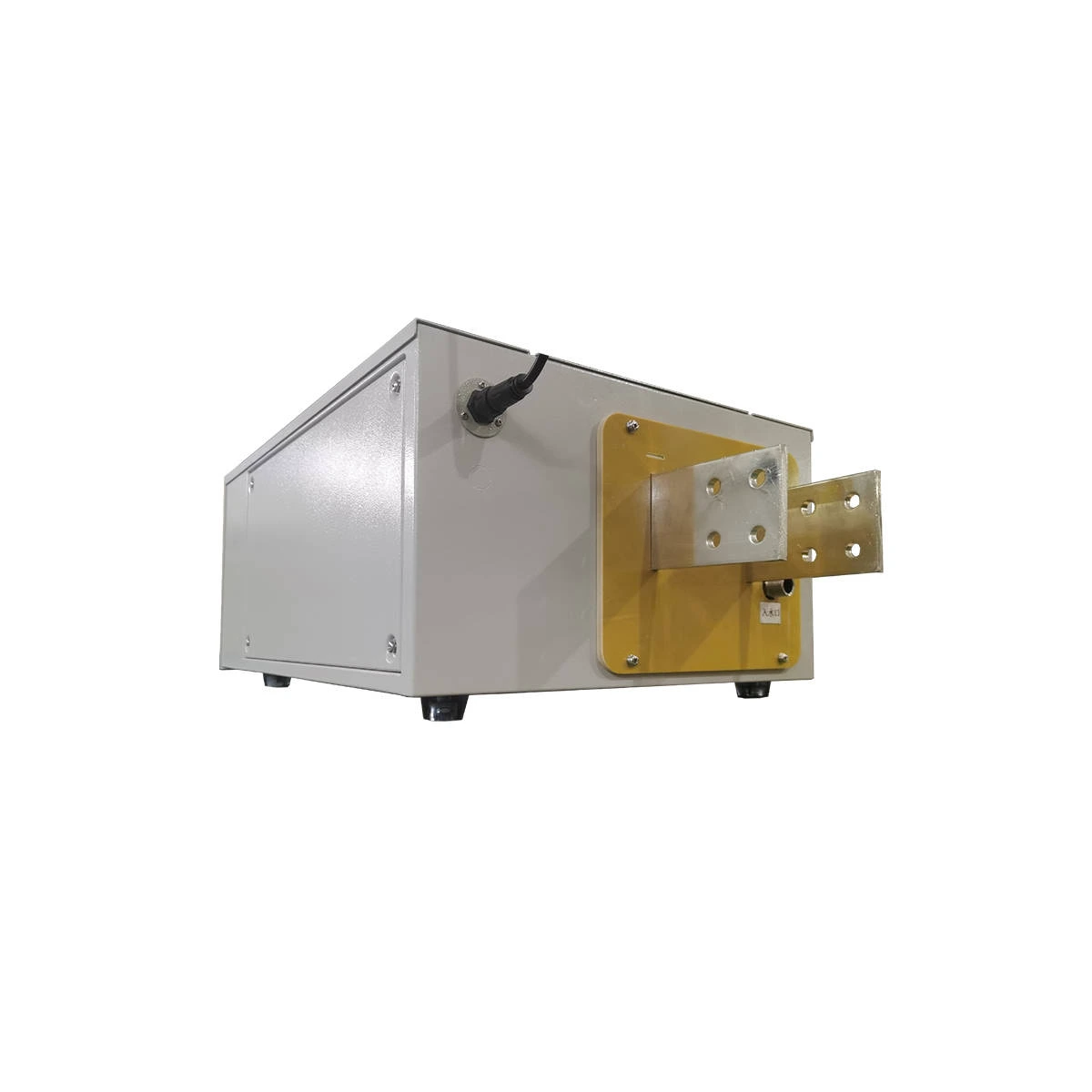
The 12V 2500A continuous tin plating rectifier provides DC power for a strip, wire, terminal or reel-to-reel tinning line after the active zones and production speed have been defined. This page focuses on continuous tin deposition; it does not assume that every tin process uses the same bath or waveform.
Published Rating
| Rated DC output | 12 V, 2500 A |
|---|---|
| Primary application | Continuous strip and reel-to-reel tin plating |
| AC input for quotation | Specify AC 380 V or 415 V and local frequency. Final input configuration requires confirmation. |
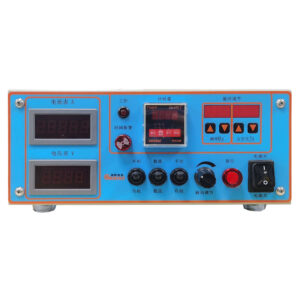
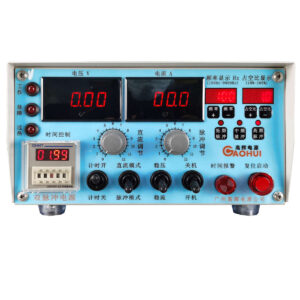
| Main regulation mode | Constant-current or constant-voltage main mode, selected for the process. Final control configuration requires confirmation. |
| Cooling and enclosure | Selected from output power, duty cycle, ambient temperature, installation environment and available cooling conditions. |
Continuous-Line Selection
Continuous plating is sized from tin chemistry, strip width, plated sides, selective area, line speed, active tank length and the number of energized zones. Effective processing time is linked to line speed and active length. Multiple anode zones may require independent outputs rather than one combined rectifier.
Matte tin and other tin finishes must be identified from the chemistry and coating specification. Pulse operation, multiple channels and line-speed following are project functions only when the line design requires them.
Information Required for Quotation
- Tin finish, bath chemistry, substrate and underplate.
- Strip/wire dimensions, plated sides, selective area and target thickness.
- Line speed range, active length, number of tanks and energized zones.
- Current density, loaded zone voltage and busbar arrangement.
- Number of independent outputs and required line-control signals.
Configuration Boundary
This page confirms the published DC rating and application only. Cooling method, enclosure grade, control interface, ramp profile, timer, ampere-hour control, pulse operation, polarity reversal, communication protocol and any special ripple limit are optional project items only when confirmed in writing. They are not included by default.
Frequently Asked Questions
Can current be selected from strip width alone?
No. Plated area per unit time, line speed, active length and current density are also required.
Does continuous tinning require pulse current?
Not automatically. The bath supplier and validated process determine the waveform.
When are multiple outputs needed?
Use independent outputs when separate tanks or anode zones require different current settings or control.
See the complete continuous electroplating rectifier range, or send the process data for a rectifier selection review.
Reviews
There are no reviews yet.