

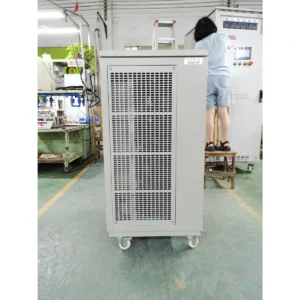
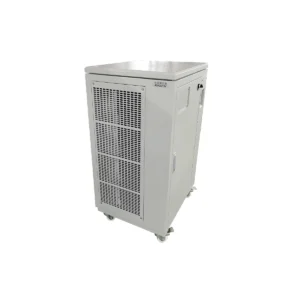
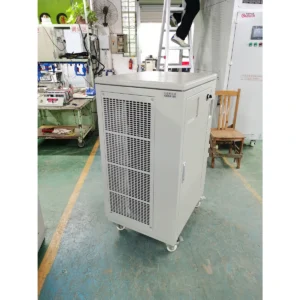
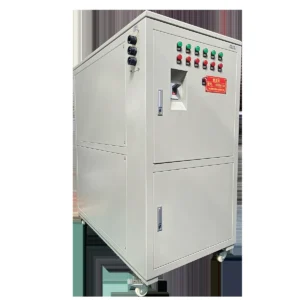
The 48V 1000A electrocatalytic oxidation rectifier provides DC power for an electrochemical water-treatment reactor after the electrode system and treatment objective have been defined. It is suitable for project evaluation where current density, electrode area and water chemistry are known.
Published Rating
| Rated DC output | 48 V, 1000 A |
|---|---|
| Primary application | Electrocatalytic oxidation water treatment |
| AC input for quotation | Specify 380 V or 415 V AC and local frequency. Final configuration requires project confirmation. |
| Main regulation mode | Constant-current or constant-voltage main mode, selected for the process. Final control configuration requires confirmation. |
| Cooling and enclosure | Selected from duty cycle, ambient temperature, installation environment and available cooling conditions. |
Application Fit
“Electrocatalytic oxidation” can refer to direct anodic oxidation, mediated oxidation or a three-dimensional electrode system. It should not be treated as interchangeable with electrocoagulation, electro-Fenton treatment or photocatalysis. The process route determines the electrode material, polarity, current density and control requirements.
A first current estimate uses I = J × A, based on active electrode area. The working voltage is then checked from conductivity, electrode spacing, cell arrangement, temperature and connection losses. Treatment performance must be evaluated against pollutant removal, energy use and by-product risk rather than current alone.
Data Required for Selection
- Provide wastewater source, target pollutants, inlet and outlet limits, flow and residence time.
- Provide COD, conductivity or salinity, chloride level, pH and temperature range.
- Identify electrode material, active area, spacing, reactor arrangement and target current density.
- State whether the route is direct oxidation, mediated oxidation or a three-dimensional electrode process.
- Provide duty, local AC supply, ambient conditions and the control signals required by the treatment system.
Configuration Boundary
This page confirms the published DC rating and application only. Cooling method, enclosure grade, control interface, ramp profile, timer, ampere-hour control, pulse operation, polarity reversal, communication protocol and any special ripple limit are optional project items only when confirmed in writing. They are not included by default.
Frequently Asked Questions
Can the rectifier be selected from flow rate only?
No. Flow must be combined with reactor residence time, electrode area, current density and water chemistry.
Is electrocatalytic oxidation the same as electrocoagulation?
No. They use different treatment mechanisms and commonly require different electrode and operating strategies.
Why must chloride be reported?
Chloride can influence oxidation pathways and by-product risk, so it is part of process and materials evaluation.
See the complete electrocatalytic oxidation rectifier range, or send the process data for a rectifier selection review.
Reviews
There are no reviews yet.