
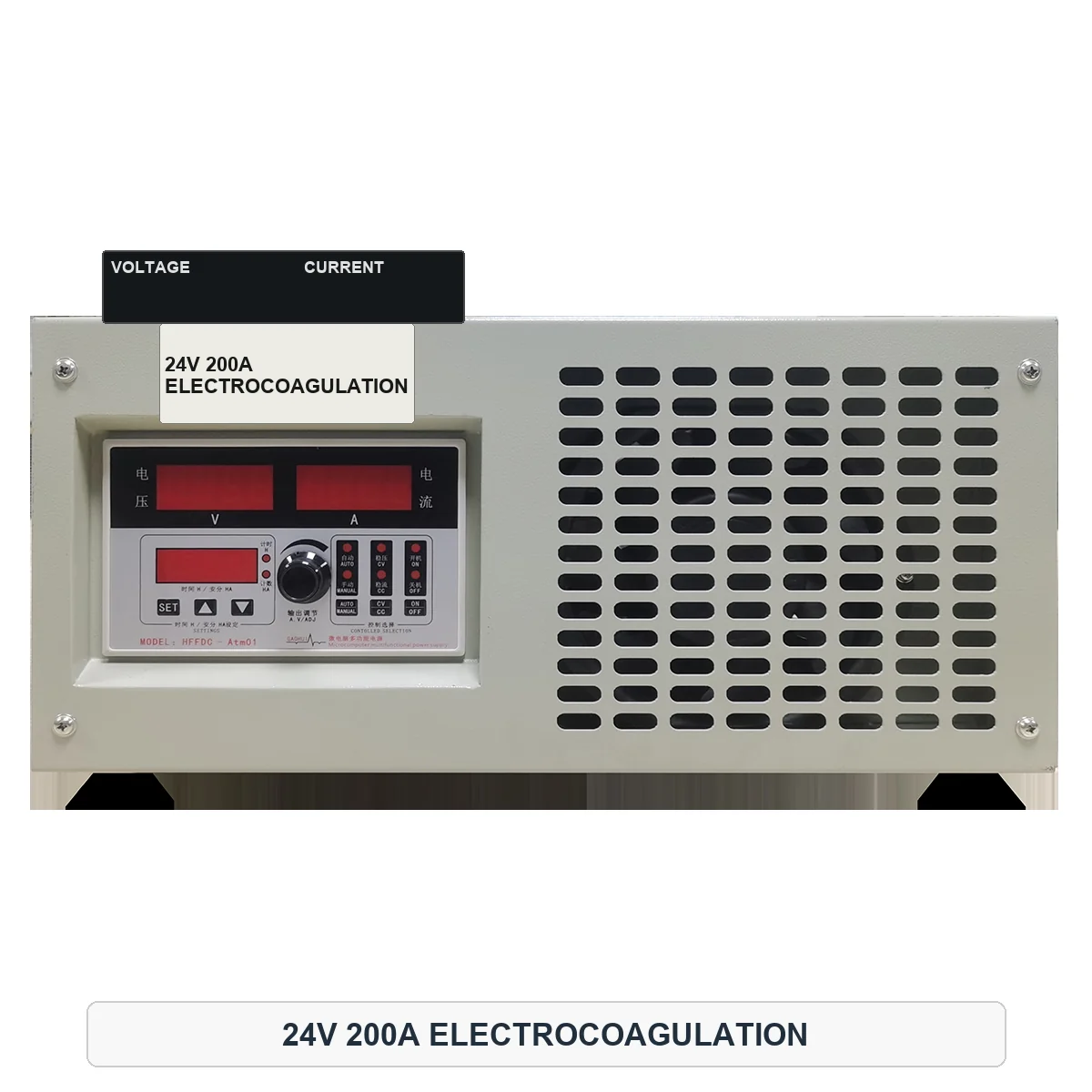
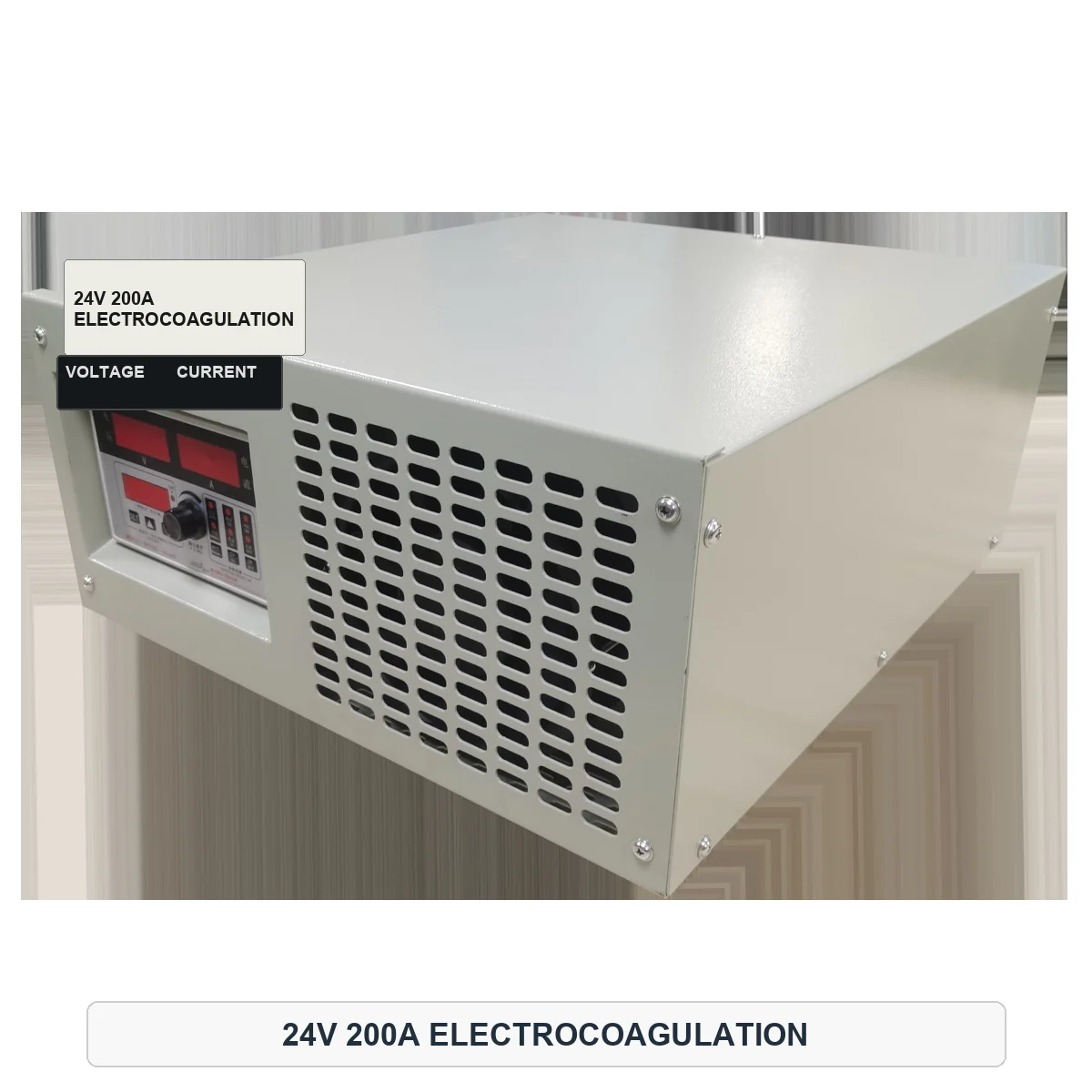
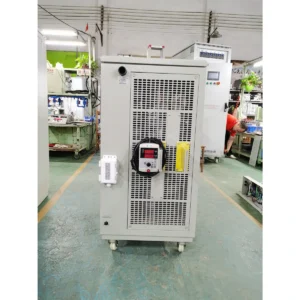
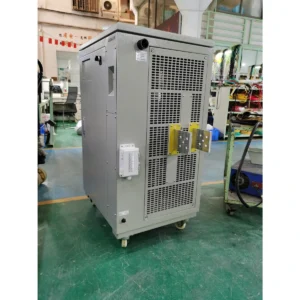
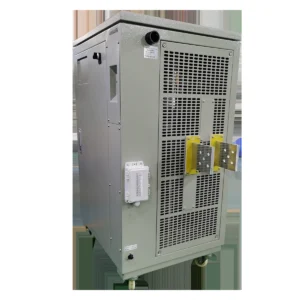
The 24V 200A Electrocoagulation Rectifier is an air-cooled adjustable DC power supply for iron or aluminum electrode reactors. It delivers up to 4.8 kW and gives operators direct control of the electrical input used to generate coagulant species inside a wastewater treatment cell.
How electrocoagulation uses the DC power supply
When current passes through sacrificial iron or aluminum electrodes, metal ions are released into the water and form hydroxide flocs. These flocs can capture or destabilize suspended material, while gas bubbles produced at the electrodes can assist flotation. The process is widely evaluated for turbidity, suspended solids, color, emulsified oil and selected dissolved contaminants.
The rectifier makes the current adjustable and repeatable. Treatment performance still depends on wastewater chemistry, pH, conductivity, electrode material, spacing, residence time and any settling, flotation or filtration stage used after the reactor. A stable electrical operating point makes trials easier to compare and production settings easier to reproduce.
Product specifications
| Rated DC output | 24V, 200A |
|---|---|
| Output power | 4.8 kW |
| Cooling | Air cooled |
| Control | Intelligent control panel |
| Operating modes | Adjustable constant current and constant voltage |
| Cabinet size | W450 × D500 × H230 mm |
| Approximate weight | 33 kg |
| Installation | Compact cabinet for pilot, skid-mounted or small production systems |
Typical treatment systems
- Batch or continuous-flow electrocoagulation reactors
- Pilot plants used to establish current density and treatment time
- Wastewater skids for turbidity, color, oil or suspended-solids treatment
- Existing reactors that need an adjustable replacement DC source
The same 24V 200A rating may behave differently in two water streams. Low conductivity, wider electrode spacing or a series-connected electrode arrangement can increase the required voltage, while a larger active electrode area generally increases the required current.
A simple way to choose the output
First determine the active immersed electrode area and the current density established by testing. Multiplying these values gives the required operating current. Then measure the voltage needed to maintain that current under the lowest expected conductivity and the widest normal electrode spacing. Flow rate is important for reactor sizing, but it should not be used alone to select amperes.
| Example rating | Possible use |
|---|---|
| 12V 100A | Small reactor or early pilot work with a low loaded voltage |
| 24V 200A | Pilot-to-small-production systems with moderate electrode area |
| 24V 500A | Larger electrode area or increased treatment capacity |
| 24V 1200A | Higher-throughput equipment with substantial parallel electrode area |
Controls that can simplify operation
Constant-current operation can help maintain the selected current density as conductivity and electrode condition change. Optional timer control, recipe storage, remote setpoints, alarm outputs, PLC interlocks and RS485 communication can support automated skids. Periodic polarity reversal or pulse operation can also be configured when the reactor and cleaning strategy require it; these functions are selected for the treatment process rather than added automatically.
Custom output from 1–1000V and 1–100,000A is available for electrochemical treatment equipment. Cooling, cabinet dimensions, terminals and control functions can be adapted to the installation.
What to send for selection
Share the wastewater type, conductivity and pH range, treatment flow or batch volume, electrode material, number and dimensions of plates, active area, spacing, connection method, trial current density, loaded voltage and operating hours. If a pilot test already produced useful results, include those settings so the production rectifier can be scaled from real process data.
Browse more electrocoagulation rectifiers, explore electrochemical water treatment power supplies, or contact us about a 24V 200A electrocoagulation system.
Reviews
There are no reviews yet.