
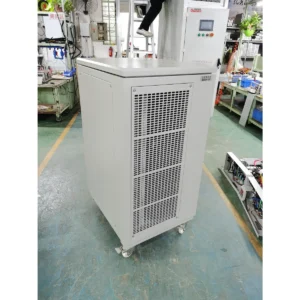
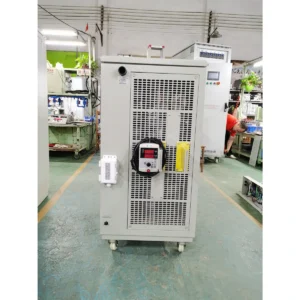
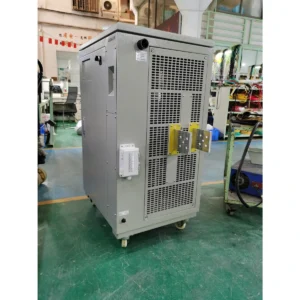
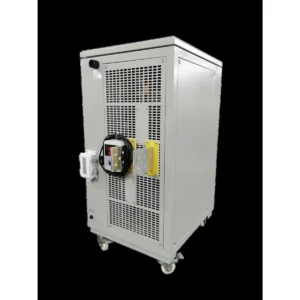
The 18 V 500 A electrocoagulation rectifier is a compact 9 kW DC source for reactors that use sacrificial metal electrodes in conductive water. Its low-voltage, high-current output suits plate-electrode loads where process current is more important than high open-circuit voltage. The reference unit has a horizontal enclosure, air cooling and a 4.3-inch local panel.
Electrocoagulation performance depends on reactor design and water chemistry as well as the power supply. Electrode material, effective area, plate spacing, conductivity, passivation and operating current density all affect the loaded electrical point. Treatment capacity should not be estimated from 18 V and 500 A alone.
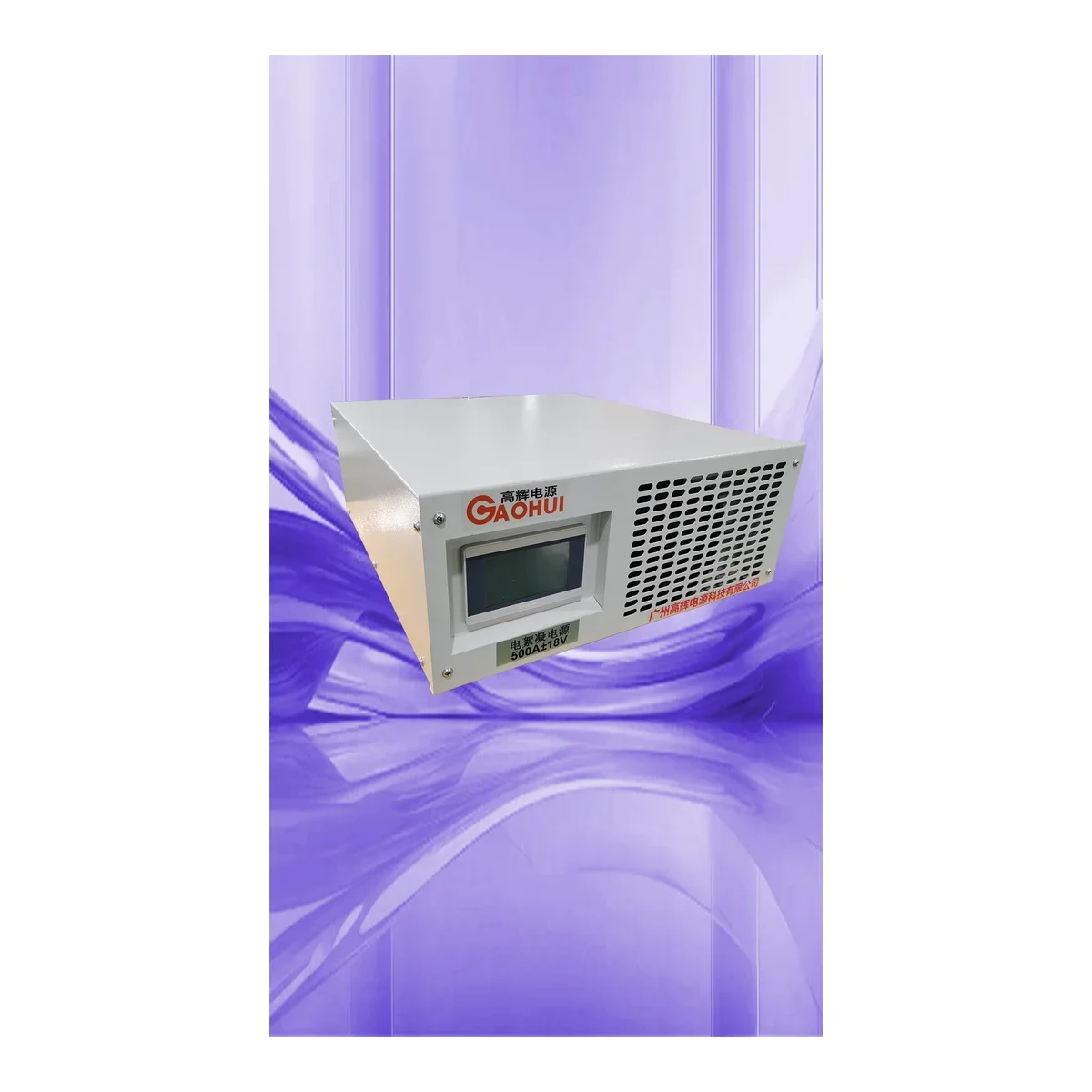
Reference product data
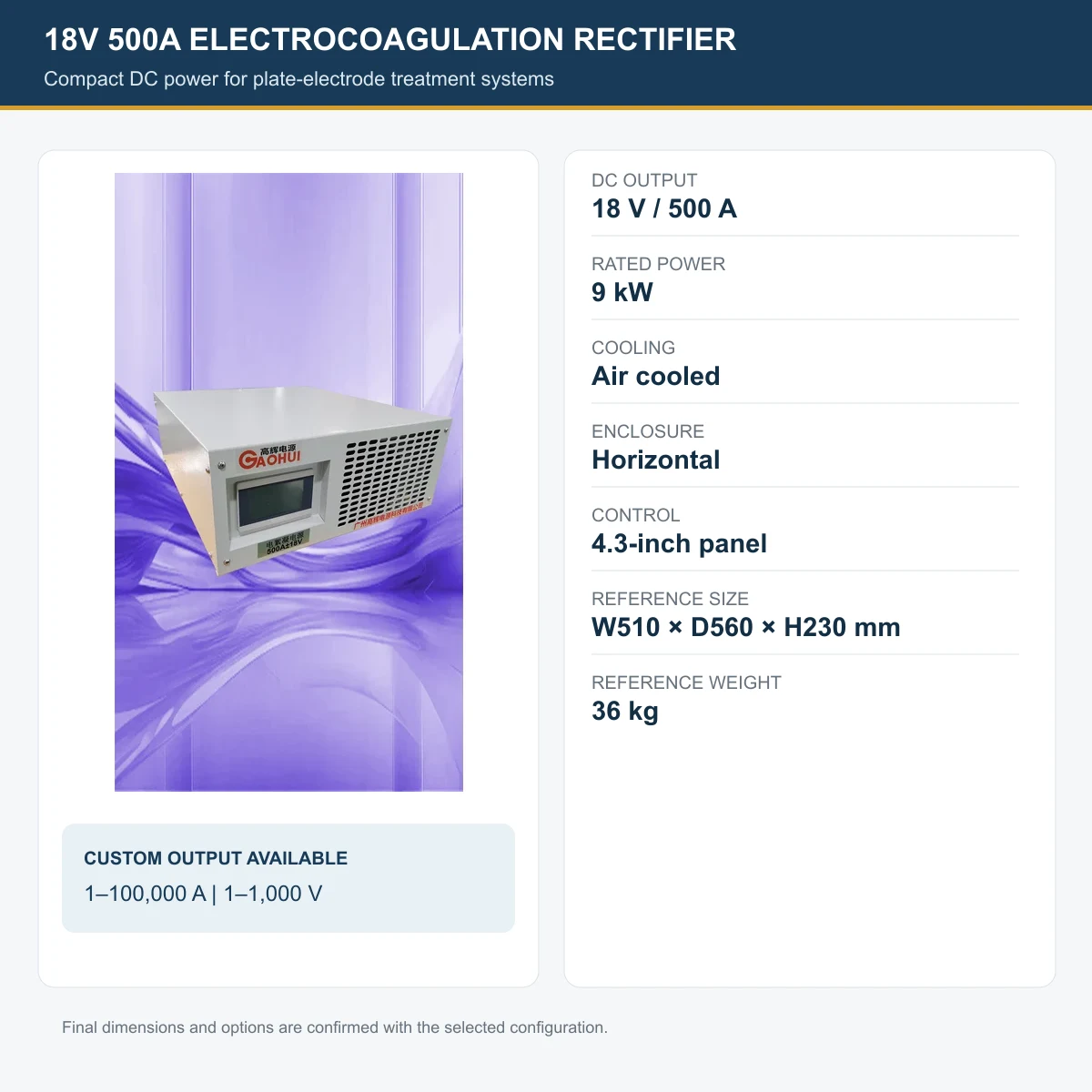
| DC output | 18 V / 500 A |
|---|---|
| Rated output power | 9 kW |
| AC input | 380 V or 415 V three-phase |
| Cooling | Air cooled |
| Enclosure arrangement | Horizontal |
| Operator interface | 4.3-inch panel |
| Reference enclosure | W510 x D560 x H230 mm |
| Reference weight | 36 kg |
| Primary control mode | Constant current or constant voltage, selected for the reactor |
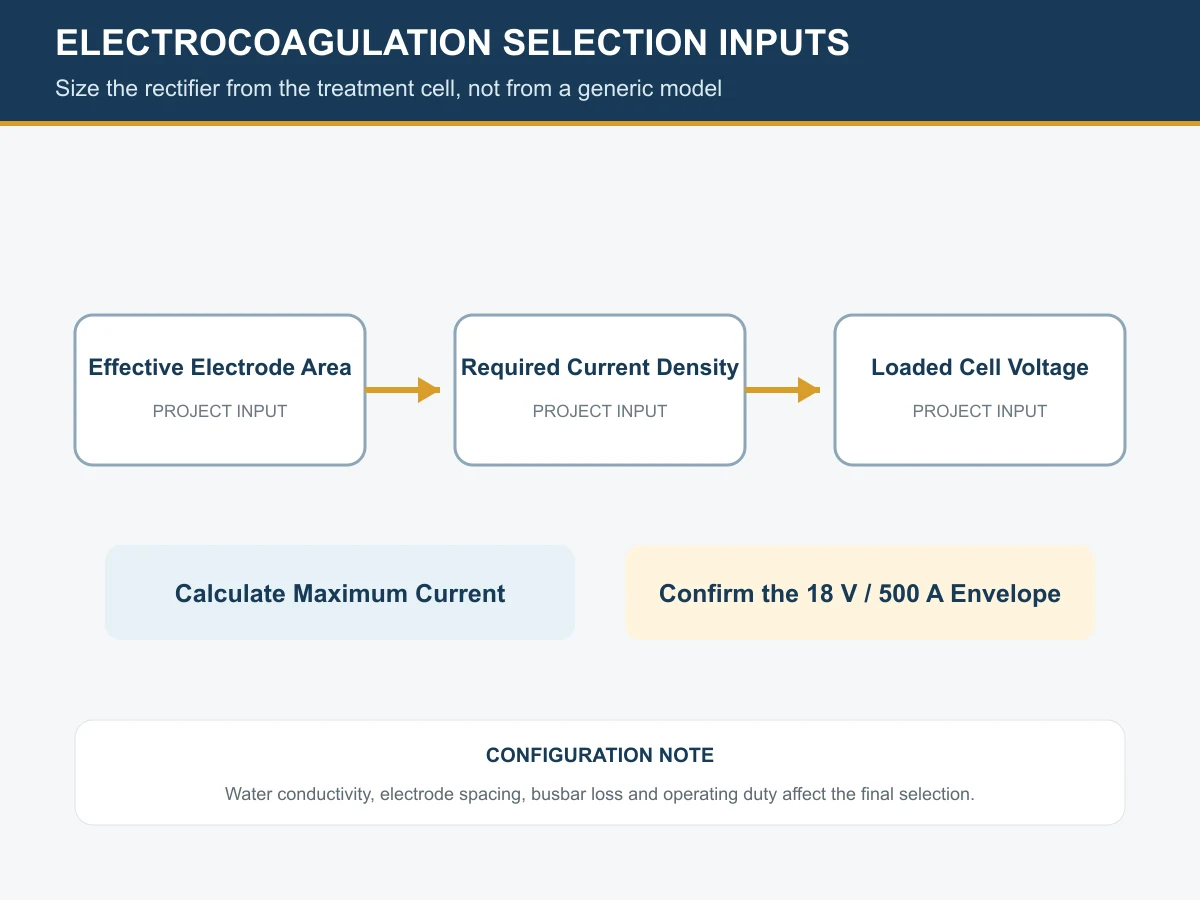
How to select the operating current
Current is normally related to approved current density and effective submerged electrode area. A useful starting relationship is current equals current density multiplied by effective electrode area. The selected value should follow pilot data, electrode material and the water-treatment objective. It should also account for how many electrode groups operate at one time.
Why loaded voltage must be measured or estimated
DC voltage needed to maintain target current is influenced by water conductivity, electrode gap, scale or passivation, busbar and cable losses, connection resistance and reactor geometry. A compact 18 V unit can be appropriate for a conductive, closely spaced electrode cell, but it is not a universal voltage for every installation. Normal and worst-case loaded readings from a pilot reactor are especially useful.
Control and polarity options
The reference configuration provides local operation from the 4.3-inch panel. Automatic polarity reversal is not included as a default feature. If a process uses direction changes to manage electrode condition, required interval, switching method and reactor sequence must be specified so a suitable output arrangement can be evaluated. Remote commands or status signals can also be added when the interface list is defined.
Compact air-cooled installation
The horizontal W510 x D560 x H230 mm enclosure is useful where cabinet height is limited. Adequate clean ventilation and ambient-temperature control remain important because the design is air cooled. Placement should keep cooling paths clear and protect the unit from corrosive mist or direct liquid exposure.
Custom output without over-sizing
Available custom manufacturing ranges extend from 1 to 100,000 A and from 1 to 1,000 V, but the right electrocoagulation unit is usually the smallest practical range that covers the verified reactor load and operating margin. Total power, site input, ventilation, enclosure style and control requirements determine the final configuration.
Details that improve quotation accuracy
- Electrode material, effective submerged area and number of active groups
- Normal and maximum process current density
- Water conductivity range and electrode spacing
- Measured or estimated normal and maximum loaded voltage
- Operating schedule, site input and required local or remote controls
Frequently asked questions
How is electrocoagulation current selected?
Use effective electrode area and a current-density range supported by the water-treatment process or pilot test. The power supply then provides required current with appropriate adjustment margin.
Does this model include automatic polarity reversal?
No. The reference 18 V 500 A configuration does not claim automatic reversal. A reversal function can be evaluated only when the process sequence and switching requirements are specified.
Can 9 kW determine the treatment flow rate?
No. Flow capacity also depends on water chemistry, reactor residence time, electrode material, current efficiency and treatment target.
Compare electrocoagulation rectifiers
View the electrocoagulation rectifier category or compare the 36 V 50 A electrocoagulation rectifier for a different load window. To match a reactor, send the electrode and water data.
Reviews
There are no reviews yet.