
Compact DC Power for Electropolishing Loads
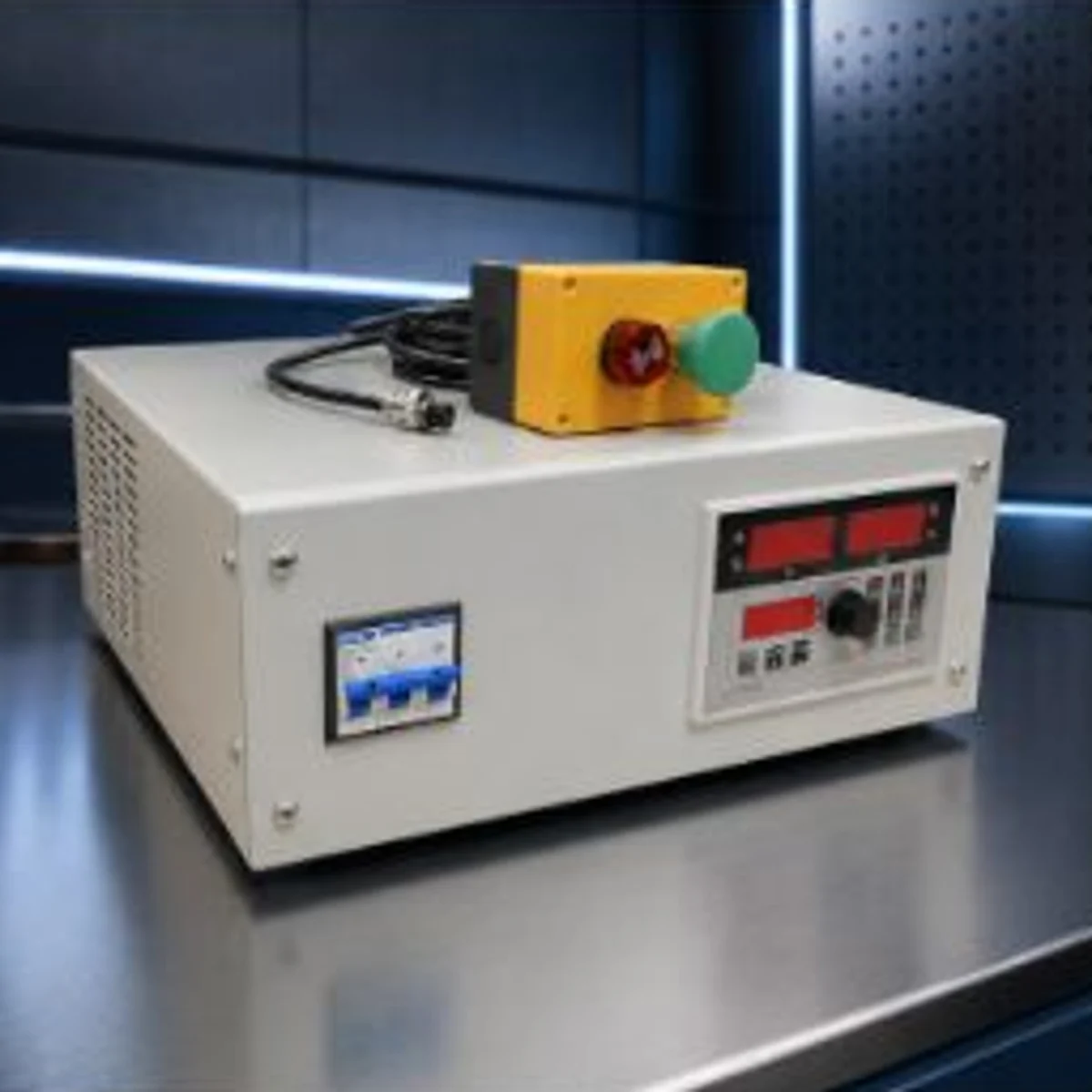
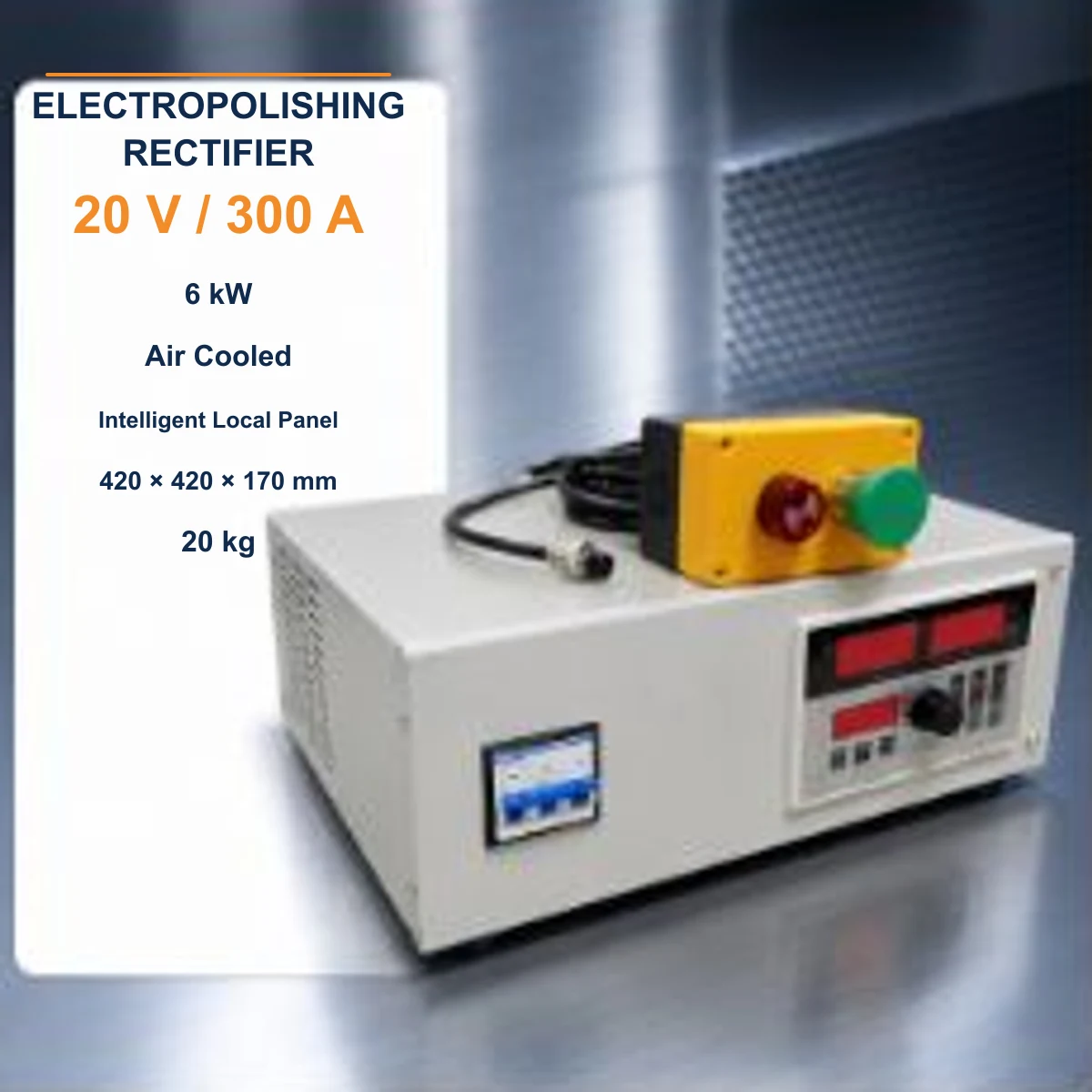
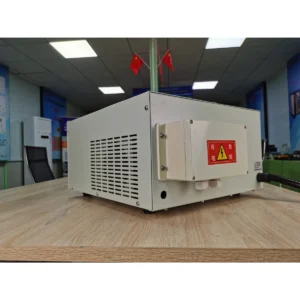
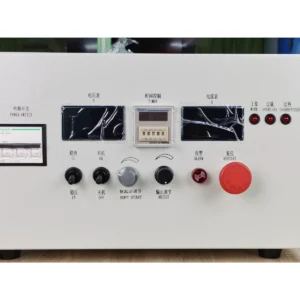
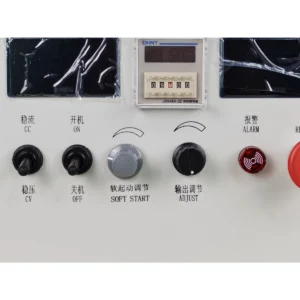
This 20V 300A electropolishing rectifier provides a 6 kW adjustable DC envelope in a compact horizontal, air-cooled enclosure. The intelligent local panel supports direct setting and monitoring at the equipment.
The published rating is not a universal recipe for stainless steel or another material. Working current and voltage must be selected from the part area, electrolyte, fixture arrangement and the process window used for the required surface finish.
Key Specifications
| Item | Value |
|---|---|
| Rated DC output | 0–20 V, 0–300 A |
| Rated output power | 6 kW |
| Application | Electropolishing DC supply |
| Cooling | Air cooled |
| Control | Intelligent local panel |
| Enclosure | Horizontal, W420 × D420 × H170 mm |
| Reference weight | 20 kg |
| AC input direction | 380 V or 415 V, selected for the site |
Why This Rating Can Suit Smaller Electropolishing Systems
- The 300A current envelope can be evaluated for limited simultaneous part area or smaller batch fixtures.
- The 20V voltage range provides room for the loaded bath and connection losses without assuming that the process will operate at the maximum value.
- The horizontal 420 mm × 420 mm footprint is convenient for integration near a compact tank or dedicated polishing station.
- Air cooling removes the need for a process-water connection at the power unit.
Current Selection by Effective Surface Area
Calculate the initial current from the total effective surface area energized at one time multiplied by the current density approved for the material, electrolyte and finish target. Include all simultaneously polished surfaces and clarify whether internal surfaces, racks or masked areas are active.
Batch size matters. A current that is adequate for one fixture may be insufficient when more parts are added. Provide the normal load and the largest planned load so the 300A envelope can be compared with the actual maximum requirement.
Voltage, Contacts and Bath Conditions
Loaded voltage is influenced by electrolyte composition and temperature, electrode spacing, cathode arrangement, fixture contacts, cables and busbars. Poor contacts or long conductors can consume part of the available voltage before it reaches the tank.
For an existing process, record normal and maximum loaded voltage and current during a representative batch. For a new system, use the process supplier’s design data and include the longest conductor path and largest fixture.
Installation and Adjacent Rating Choice
Choose this rating when the calculated maximum current remains within 300A and the highest loaded voltage remains within 20V. A lower rating may be sufficient for a small laboratory or single-part fixture; a higher rating may be needed for larger area, more parts per load or longer conductor runs.
Maintain clear air intake and exhaust paths. Keep corrosive mist away from the enclosure and allow access to the panel, AC entry and DC connections.
Voltage, current, 380V/415V input, enclosure arrangement, remote operation and timing or ramp requirements can be specified for the polishing line. Provide the desired operating sequence and any external interlock signals when requesting additional controls.
Information Needed for a Quotation
- Part material, electrolyte and required surface finish
- Effective area per part and maximum simultaneous load
- Process current-density window and cycle time
- Normal and maximum loaded voltage and current
- Tank, cathode, fixture and DC conductor arrangement
- Duty cycle, ambient conditions, AC supply and control needs
Frequently Asked Questions
Is 20V the normal electropolishing setpoint?
No. It is the rated voltage limit. The working setpoint is selected from the actual loaded bath and the process supplier’s window.
How do I know whether 300A is enough?
Multiply the maximum simultaneously polished area by the approved current density, then compare the result with the available current envelope.
Can the same settings be used for different metals?
Not automatically. Material, electrolyte, temperature and finish requirements can change both the current-density and voltage window.
See more electropolishing rectifiers or send your batch data for a quotation.
Reviews
There are no reviews yet.